Scalability has always been one of blockchain’s greatest challenges. While networks like Ethereum laid the foundation for decentralized applications, their limited throughput and high fees have often restricted adoption. Developers and researchers have been searching for solutions that balance speed, security, and decentralization. Among the most promising answers to emerge is the Zero-Knowledge (ZK) Rollup, a technology reshaping how blockchains scale without compromising their core principles.
What Exactly Are ZK Rollups?
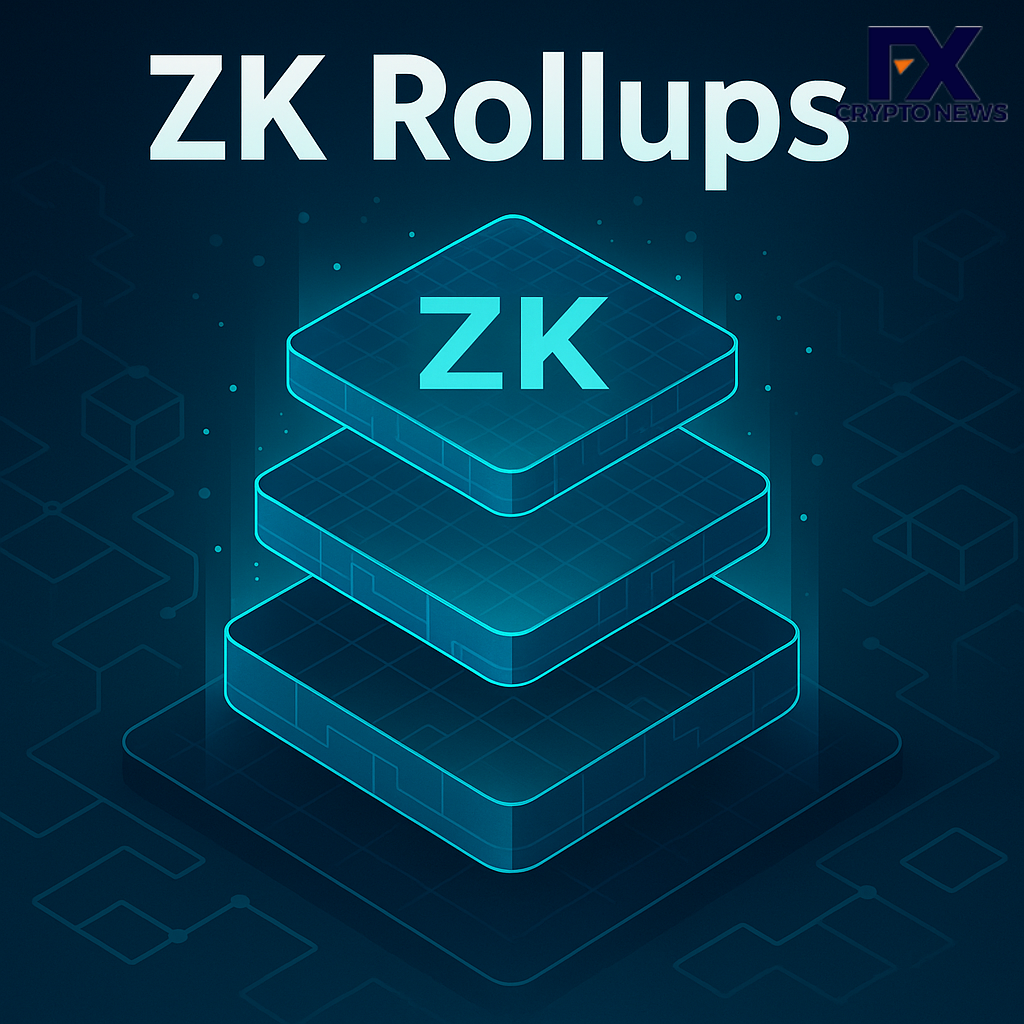
A ZK Rollup is a layer-two scaling solution that processes transactions off-chain while still benefiting from the security of the main blockchain. Instead of recording every transaction directly on Ethereum or another base chain, ZK Rollups bundle hundreds of transactions into a single proof. This proof, verified using zero-knowledge cryptography, is then submitted back to the main chain.
The result is striking: faster transaction times, significantly lower fees, and a network that can handle thousands of operations per second without bloating the blockchain.
Why They’re Different From Other Scaling Approaches
Other solutions, like Optimistic Rollups or sidechains, also aim to reduce costs and improve speed. However, ZK Rollups stand out because they offer instant finality and stronger security guarantees. Optimistic Rollups rely on challenge periods, during which fraudulent transactions can be disputed and corrected. In contrast, ZK Rollups provide mathematical proofs that transactions are valid, eliminating the need for long waiting times.
This difference not only boosts efficiency but also makes ZK Rollups particularly attractive for applications that demand trust and precision, such as financial services or on-chain identity systems.
Real-World Use Cases Emerging
ZK Rollups are no longer theoretical. Several projects are already deploying them to solve pressing problems in crypto:
- Decentralized Finance (DeFi): Platforms are integrating ZK Rollups to handle large transaction volumes while keeping fees affordable.
- NFT Marketplaces: By batching transactions, marketplaces can lower minting and transfer costs, making digital art more accessible.
- Cross-Border Payments: ZK Rollups enable faster and cheaper remittances, bypassing traditional financial bottlenecks.
These use cases highlight how the technology is moving beyond research papers into production systems that touch everyday users.
Related article: Chasing Shadows: Could Nick Szabo, Peter Todd, or David Chaum Be Satoshi Nakamoto?
The Advantages and Trade-Offs
The benefits of ZK Rollups are clear: reduced fees, faster throughput, and high security. Yet, like any innovation, they come with trade-offs. The cryptography behind zero-knowledge proofs is complex and resource-intensive to generate, though advancements are rapidly reducing costs. Additionally, developer tooling is still evolving, meaning widespread adoption may take time.
However, the trajectory is clear. With increasing investment and rapid research progress, ZK Rollups are quickly overcoming early limitations.
Looking Ahead: A Scalable Future
As blockchain adoption accelerates, scalability will continue to be the deciding factor in whether decentralized technologies can truly rival traditional systems. ZK Rollups are not just a technical fix; they represent a paradigm shift in how blockchains operate. By merging efficiency with trust, they bring the industry closer to mass adoption.
In the years ahead, we are likely to see ZK Rollups integrated into everything from decentralized identity frameworks to large-scale financial networks. Their quiet revolution is already underway, and it may soon define the future of blockchain scalability.
Olasunkanmi Abudu
Olasunkanmi Abudu is a Web3 content writer with over five years of experience covering blockchain, decentralized finance, and digital assets. He specializes in producing well-researched and accessible content that explains complex technologies and market trends to both general readers and industry professionals.