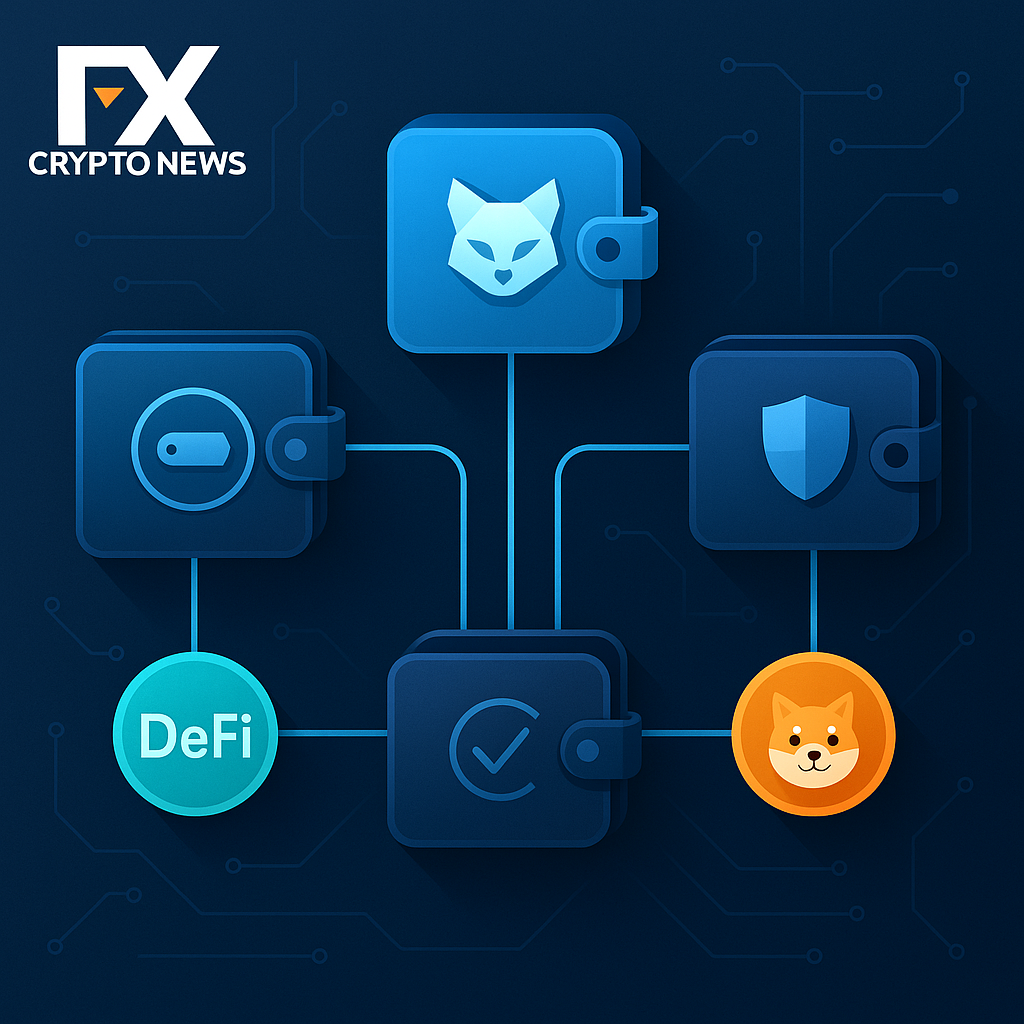
In the ever-evolving world of Web3, some tools shape the landscape — and Trust Wallet is one of them.
Launched in 2017, it started as a basic crypto storage app that allowed users to store their Ethereum-based tokens securely. Fast forward to 2025, and Trust Wallet has transformed into a fully integrated Web3 ecosystem, empowering millions of users with access to DeFi, NFTs, staking, and cross-chain interoperability.
But how did Trust Wallet evolve from a simple app into the Web3 powerhouse it is today?
Let’s take a journey through its growth and explore how Trust Wallet has become the go-to wallet for mobile traders, DeFi enthusiasts, and NFT collectors.
1. The Early Days: A Simple Storage App for Crypto
Initially, Trust Wallet was a secure crypto wallet specifically designed for ERC-20 tokens.
It was created with one goal in mind: user privacy. Unlike centralized exchanges where users risked losing access to their private keys, Trust Wallet allowed users to fully control their assets by storing private keys locally.
The app quickly gained traction due to its:
- Open-source code (audited by the community).
- Simple interface — making it easy for both beginners and experienced crypto users.
- Support for Ethereum-based tokens (ERC-20, ERC-721) and later BNB Chain (formerly Binance Smart Chain).
This simple wallet was ideal for HODLing tokens, but it laid the groundwork for something bigger.
Read Also: Why Multi-Chain Wallets Are Dominating the 2025 DeFi Landscape
2. Acquired by Binance: A Gateway to DeFi and NFTs
In 2018, Trust Wallet was acquired by Binance, one of the largest cryptocurrency exchanges in the world.
This acquisition set the stage for Trust Wallet’s expansion, transforming it from a niche crypto wallet into a multi-chain, decentralized finance gateway.
Binance’s support allowed Trust Wallet to scale quickly, adding new blockchain integrations such as:
- BNB Chain — offering users access to cheaper and faster transactions.
- Ethereum and ERC-20 tokens remained a key focus, but new blockchain networks started to emerge.
- Cross-chain functionality for various assets, including NFTs.
Trust Wallet’s collaboration with Binance also introduced staking, allowing users to earn rewards directly from the wallet by staking their favorite tokens.
3. Web3 Expansion: Integrating DApps and NFTs
In 2020, Trust Wallet embraced the Web3 movement by integrating DApp browsing functionality.
This marked a major milestone in its evolution, as users could now interact with decentralized applications (DApps) directly from their mobile wallets. With Web3 integration, Trust Wallet became a one-stop portal for users to explore the decentralized internet, including DeFi protocols, decentralized exchanges (DEXs), and NFT marketplaces.
Some of the key additions included:
- DApp browser for exploring decentralized platforms, such as Uniswap, SushiSwap, and Aave.
- NFT storage allowing users to store their NFTs seamlessly and view them directly in the wallet.
- Built-in staking for cryptocurrencies like BNB, Ethereum, and Tezos.
This expansion marked Trust Wallet’s transition from a simple storage app to an interactive Web3 gateway, connecting users to the full decentralized ecosystem.
4. Enhancing Security: Protecting Users in Web3
As Trust Wallet’s ecosystem expanded, so did the need for robust security features.
In response to the growing threat of phishing attacks, smart contract exploits, and social engineering scams, Trust Wallet introduced new features designed to safeguard users while navigating the Web3 space.
Key Security Features:
- Phishing Protection: Trust Wallet implemented real-time domain detection and warnings for potentially malicious DApps and phishing sites.
- Smart Contract Risk Simulation: Before users sign a transaction, the app simulates the contract’s behavior to flag potentially harmful actions, such as token approvals or risky interactions.
- Encryption and Biometric Authentication: Trust Wallet’s private keys are stored locally and encrypted, with optional biometric protection to safeguard access.
These enhancements ensured that users could securely interact with the growing Web3 space while minimizing risk.
5. The Rise of Multi-Chain Wallets: Embracing Cross-Chain DeFi and NFT Support
By 2025, the crypto landscape had become multi-chain — with Ethereum, Solana, Avalanche, BNB Chain, and even Bitcoin Ordinals all hosting their own vibrant ecosystems.
As the need for cross-chain functionality grew, Trust Wallet pivoted once again to support 100+ blockchains and native cross-chain asset transfers.
Trust Wallet’s adoption of multi-chain architecture enabled users to:
- Seamlessly swap assets across different blockchains without leaving the wallet.
- Stake and yield farm across Ethereum, Solana, Polygon, and more.
- Mint, store, and trade NFTs across different ecosystems like Ethereum, Tezos, and Solana.
With the ability to hold and transact assets across a vast array of blockchains, Trust Wallet has become the go-to choice for multi-chain DeFi users and NFT collectors who want to access all Web3 ecosystems from a single app.
6. Trust Wallet’s Role in Web3’s Future
Looking ahead, Trust Wallet’s ecosystem continues to evolve, positioning itself as the leading mobile Web3 gateway.
By embracing new technologies like NFTFi, layer-2 scaling, and cross-chain decentralized exchanges, Trust Wallet will play a pivotal role in:
- Bridging fragmented chains for seamless DeFi experiences.
- Empowering users to access emerging DeFi products and innovative NFT use cases.
- Integrating cutting-edge technologies like AI-driven smart contracts for optimized trading and yield farming.
Trust Wallet’s growth reflects the changing needs of the Web3 world — from secure asset storage to full ecosystem access. The wallet’s future lies in interoperability, security, and user empowerment within the decentralized economy.
Conclusion
Trust Wallet’s journey from a simple storage app to a Web3 gateway is a testament to the power of adaptation and innovation.
With multi-chain support, cross-chain DeFi access, and NFT integration, Trust Wallet has become an essential tool for crypto users in 2025.
As Web3 continues to evolve, Trust Wallet is well-positioned to remain a key player, simplifying the decentralized world for everyday users while keeping their assets secure.
FAQs
1. When did Trust Wallet start supporting multi-chain functionality?
Trust Wallet began integrating multi-chain support in 2020, allowing users to interact with Ethereum, BNB Chain, and Solana directly from the app.
2. Is Trust Wallet secure for staking DeFi tokens?
Yes, Trust Wallet provides encrypted key storage, phishing protection, and smart contract simulations, ensuring security for DeFi staking.
3. Can I store NFTs in Trust Wallet?
Yes, Trust Wallet supports NFT storage for assets from Ethereum, Polygon, and Solana, allowing users to view and manage their NFTs directly in the app.
4. Does Trust Wallet support Web3 integration?
Yes, Trust Wallet includes a DApp browser that lets users interact with decentralized apps (DApps) directly, including DeFi protocols and NFT marketplaces.
5. What’s next for Trust Wallet’s Web3 ecosystem?
In the coming years, Trust Wallet will likely continue expanding its multi-chain capabilities and integrate new technologies like AI-driven DeFi and NFTFi to provide users with a more personalized experience.
Oluwadamilola Ojoye
Oluwadamilola Ojoye is a seasoned crypto writer who brings clarity and perspective to the fast-changing world of digital assets. She covers everything from DeFi and AI x Web3 to emerging altcoins, translating complex ideas into stories that inform and engage. Her work reflects a commitment to helping readers stay ahead in one of the most dynamic industries today