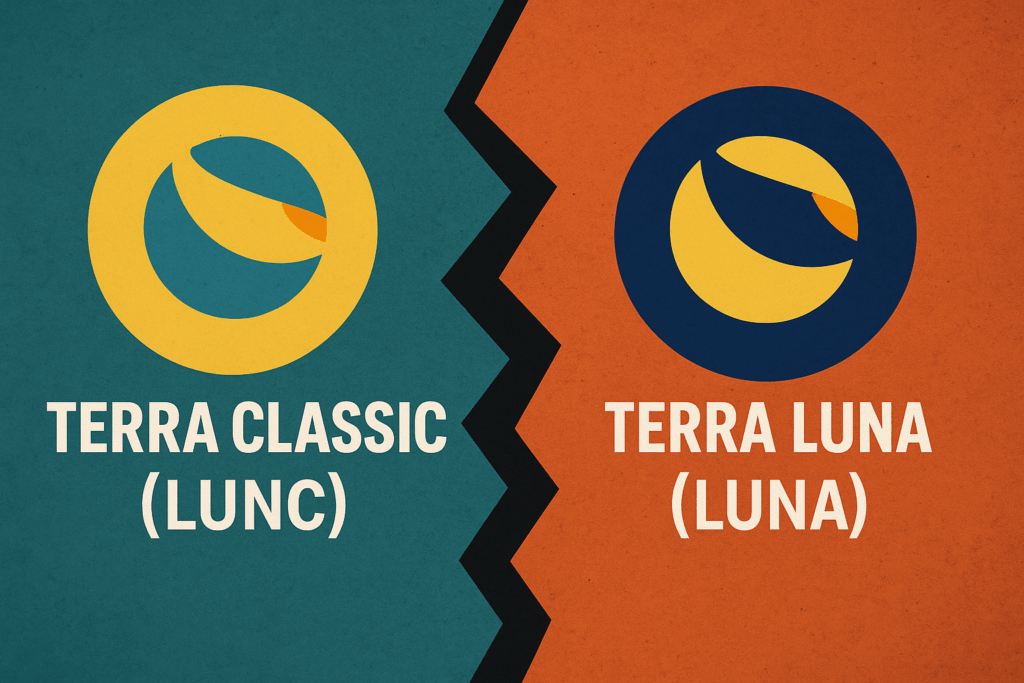
The story of Terra is one of the most dramatic in the history of cryptocurrency. What began as one of the most ambitious blockchain projects in the world collapsed almost overnight in 2022, erasing billions in market value and leaving investors reeling. Out of this collapse emerged two tokens — Terra Classic (LUNC) and Terra Luna (LUNA) — each carrying the legacy of the project but moving forward in very different directions. While Terra Classic remains tied to its community-driven survival, Terra Luna has sought reinvention through new initiatives and strategic rebuilding. Their paths today highlight two distinct approaches to redemption in the volatile world of digital assets.
Terra Classic: Survival Through Community
Terra Classic, represented by the LUNC token, became the direct successor of the failed Terra ecosystem. After the collapse of the algorithmic stablecoin TerraUSD (UST), the original Luna blockchain was rebranded as Terra Classic. Investors and community members who stayed behind chose not to abandon the project. Instead, they rallied around LUNC, aiming to rebuild value through a grassroots approach slowly.
The Terra Classic community has played a vital role in keeping the token alive. Burn initiatives, including reducing supply, validator participation, and grassroots marketing campaigns, have fostered a sense of ownership among holders. Unlike before, where development was led by centralized decision-making, LUNC now depends on a decentralized group of developers and contributors. The community’s determination to recover even a fraction of the token’s past glory has kept Terra Classic relevant, despite market challenges and reduced institutional interest.
Terra Luna: Reinvention Through Innovation
In contrast, the new Terra Luna (LUNA) represents the blockchain’s attempt to reinvent itself. The Terra 2.0 network was launched without the flawed algorithmic stablecoin, with a focus on becoming a platform for decentralized applications, governance, and innovation. The idea was not merely to salvage what was left but to create a new path forward.
Unlike LUNC, which leans heavily on community strength, Terra Luna has emphasized development partnerships, ecosystem growth, and new dApps to regain credibility. Developers working on Terra 2.0 have shifted attention to building tools, creating sustainable DeFi solutions, and ensuring that governance processes are more transparent than in the past. This strategy positions Terra Luna not as a continuation of the old project but as a bold reinvention designed to rebuild trust with both retail and institutional investors.
Key Differences Between LUNC and LUNA
While both tokens share the Terra name, their differences define their outlook. Terra Classic is focused on reducing supply and leveraging grassroots participation to drive price appreciation. Its progress depends largely on how effective community initiatives are in sustaining momentum. On the other hand, Terra Luna is about creating something new — a blockchain ecosystem where development and adoption drive growth rather than token burning.
For traders, this means the two tokens appeal to different strategies. LUNC attracts those who believe in recovery narratives and community-led revivals, while LUNA appeals to those looking for blockchain projects with long-term development potential. Their divergence underscores how one crisis led to two very different responses.
Related article: Terra Classic (LUNC) Price Analysis at $0.000058: Eyes on the EMA Cluster and Legal Fallout from Do Kwon Case
Lessons From the Terra Collapse
The crash of Terra remains one of the most sobering reminders of the risks in the crypto market. It revealed how fragile algorithmic stablecoins can be and how quickly market confidence can vanish. For Terra Classic, the lesson has been about resilience, that even after a devastating fall, a strong community can keep a project alive. For Terra Luna, the lesson has been about reinvention, that survival may require discarding flawed systems and starting anew.
These lessons continue to shape how investors and developers approach other blockchain projects. Transparency, sustainable design, and effective governance are now viewed as critical to avoiding the mistakes of the past.
The Road Ahead
Looking forward, both Terra Classic and Terra Luna face uncertain but distinct futures. Terra Classic will need to sustain its momentum by strengthening burn mechanisms, maintaining validator participation, and expanding use cases. Its survival depends heavily on whether the community can transform determination into tangible value.
Terra Luna, by contrast, must deliver on its promises of ecosystem growth and innovation. The token’s future will hinge on the success of its decentralized applications and whether developers see Terra 2.0 as a viable platform. If Terra Luna can rebuild credibility and attract new partnerships, it may eventually distance itself from the shadow of its past.
Conclusion
From crisis emerged two different stories: Terra Classic, driven by resilience and community strength, and Terra Luna, guided by reinvention and innovation. While both tokens carry the scars of one of crypto’s darkest moments, their current paths highlight contrasting strategies for survival. For investors and observers, they offer a unique case study in how blockchain projects can respond to failure, either by clinging to community-driven revival or by embracing reinvention. The question that remains is which path will prove stronger in the years to come.
Olasunkanmi Abudu
Olasunkanmi Abudu is a Web3 content writer with over five years of experience covering blockchain, decentralized finance, and digital assets. He specializes in producing well-researched and accessible content that explains complex technologies and market trends to both general readers and industry professionals.